AI × Animals Weekly
Issue 2 · 20–26 November 2026
Subscribe
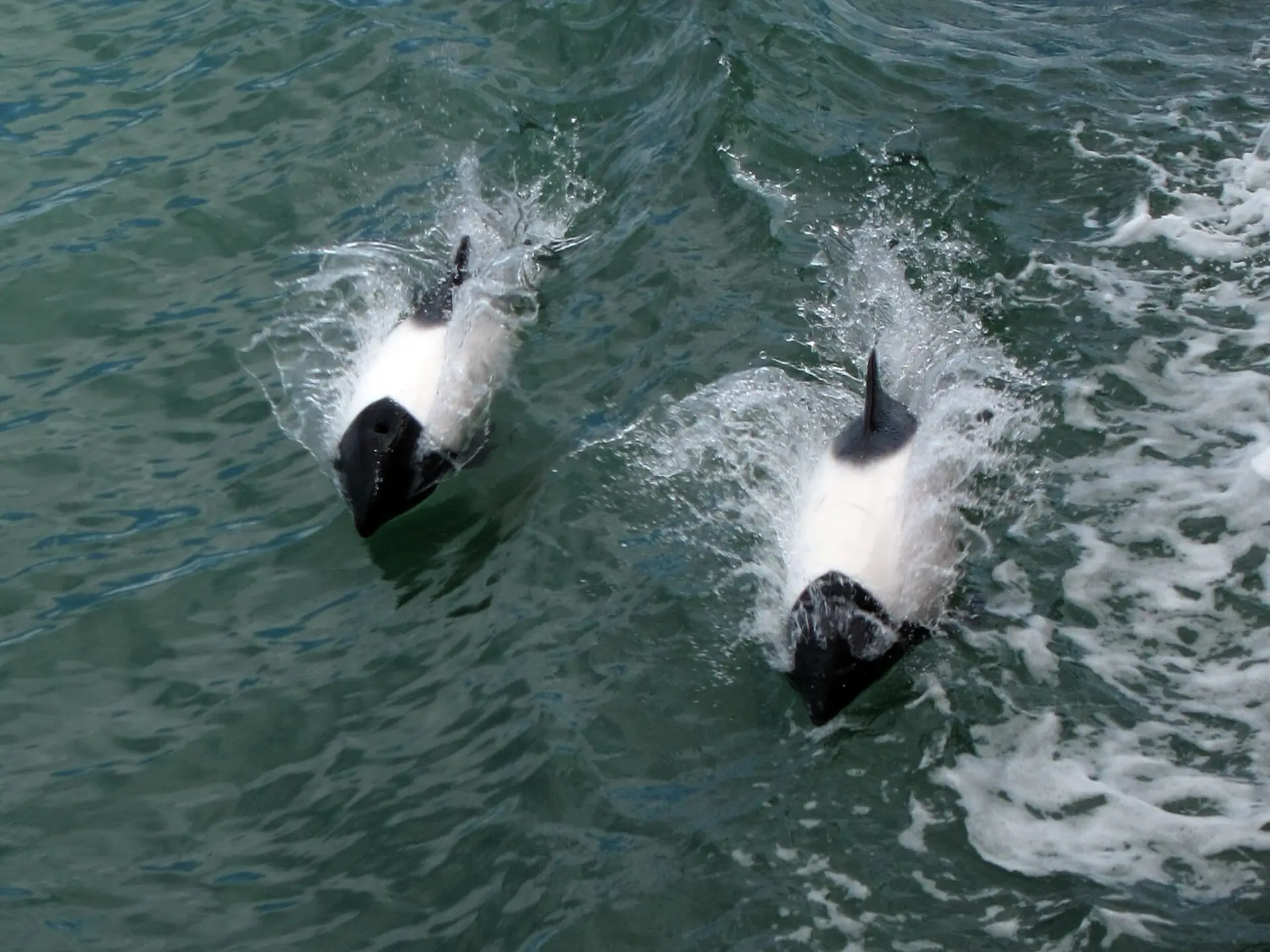
Two Commerson's dolphins surfacing in choppy water

Research & Data

New papers, open datasets and benchmarks, including studies that use research animals.

Research & Data · 1 of 23

Authors set out ethical principles for automated welfare monitoring

Christian Rodriguez and Paulin Jirkof argue that laboratory monitoring needs clear responsibility and respect for animals, alongside technical performance and the 3Rs.

Note: Scholarly ethical analysis concerning monitoring of animals used in research; not a new animal experiment.

Christian Rodriguez and Paulin Jirkof propose a framework for using automated welfare monitoring in animal research. Their article appeared in Animal Welfare on 20 November. It considers systems such as continuous rodent home-cage monitoring and argues that replacement, reduction and refinement of animal use do not address every consequence of automation.

The authors call for human accountability, fairness, transparency and respect for animals alongside welfare and the 3Rs. They discuss how monitoring can alter staff expertise, decisions about care, access between institutions and the treatment of animals as data. This is an ethical analysis, rather than a trial showing that a monitoring system improves welfare. The authors also note that principles need practical rules and further empirical work to guide their use in different species and settings.

Why it matters

An automated alert helps only when somebody is responsible for understanding and acting on it. These principles offer a way to examine the care process around a monitoring system.

Research & Data · 2 of 23

Gene screening helps researchers investigate insecticide injury in chickens

Researchers combine machine-learning analysis with an experiment in young chickens, while stressing that the initial gene hypotheses came from other chemicals and species.

Note: Research involving deliberate insecticide exposure in young chickens. Gene-screening datasets involved other chemicals in rats and mice; the experiment measured three birds per group.

Researchers at Northeast Forestry University used machine learning to help investigate kidney injury associated with lambda-cyhalothrin, an insecticide. Their 20 November paper in Animals, an MDPI journal, first screened genes using public rat and mouse datasets. Those datasets concern different chemicals, so the analysis generated hypotheses rather than validating a chicken-specific toxicity model.

The animal experiment deliberately exposed young chickens to the insecticide in feed for six weeks. Eighty birds were allocated across four groups, but the reported blood, tissue and molecular measurements used three birds per group. The authors describe kidney changes and possible biological pathways, while acknowledging that gene-expression patterns do not establish the mechanisms. This is laboratory toxicology research involving animals, not a tested on-farm warning system or a basis for setting safe exposure levels.

Why it matters

Computational screening can guide toxicity research, but transferring evidence between chemicals and species needs care. Small experimental samples limit how confidently these findings can support practical animal-health decisions.

Research & Data · 3 of 23

Veterinary radiology review puts validation and responsibility first

Jane Renee Lund and David Brundage examine the evidence and professional responsibilities behind AI imaging tools. A generated finding is not a complete radiologist’s interpretation.

Note: Research review, summarised from the indexed abstract. Lund discloses roles with Vet’s Choice Radiology and ownership of Madtown Rad.

Jane Renee Lund and David Brundage review the growing use of AI in veterinary diagnostic imaging in an article published online on 20 November. They distinguish the outputs produced by an algorithm from the broader interpretation supplied by a radiologist, and describe gaps in regulation, validation standards and governance.

The review covers how models are developed and tested, sources of algorithmic and human bias, and pitfalls in reading performance measures. It argues that veterinarians remain responsible for clinical decisions and should assess intended use, transparency and clinical utility, with documentation and continued monitoring after adoption. This is a review of evidence and practice, not a new diagnostic-accuracy trial. The accessible abstract does not provide a numerical comparison that would justify ranking individual products.

Why it matters

A headline accuracy figure cannot show whether an imaging tool will help a particular patient. Clinics need evidence relevant to their cases and a clear route for reviewing uncertain findings.

Research & Data · 4 of 23

ApexID tests individual recognition across animal species

Researchers trained a shared image model to distinguish individual animals across datasets, including elephants absent from its animal-identification training.

Note: Research using existing animal images. This study has not yet been peer reviewed.

Seifeldin Elkerdany and colleagues describe ApexID, a way to train animal-identification models using both individual identity and animal category. The team curated 132,533 images from 19 public datasets and compared model families on four external datasets. Their strongest ConvNeXt configuration achieved a dataset-averaged first-match accuracy of 64.89%.

Transfer to an unfamiliar species remained difficult. For elephants, which were absent from the animal-identification training, that configuration’s first-match accuracy was 17.69%, despite being the best tested configuration on that dataset. The headline average should therefore not be read as elephant accuracy. Recognising genuinely new individuals was also challenging. This study has not yet been peer reviewed. It tests image retrieval, rather than demonstrating that an operational monitoring programme can reliably track every animal.

Why it matters

Recognising individuals across species could reduce the work needed to build monitoring tools. The low elephant result shows why conservation teams must inspect species-specific performance before using a shared model.

Research & Data · 5 of 23

Small dog-care test compares retrieval with model fine-tuning

A 15-question study found stronger answers from a retrieval-assisted dog-care model, but its different base models prevent a clean comparison of the two techniques.

Note: Software evaluation without animal outcome testing. This study has not yet been peer reviewed.

Abubakar Sadiq Shittu and colleagues compared two approaches to generating breed-specific dog-care guidance. One retrieved information for a TinyLlama model; the other adapted a different LLaMA model using LoRA fine-tuning. The authors manually scored answers to 15 questions on a scale from zero to two. The retrieval system averaged 2.0, compared with 1.47 for the adapted model.

The test is too small to establish safe advice across the situations owners encounter. Because the systems use different base models, it also cannot isolate the effect of retrieval versus fine-tuning. The study measured responses, not decisions by owners or outcomes for dogs. It is an early software evaluation, rather than clinical validation. This study has not yet been peer reviewed.

Why it matters

Grounding an answer in a source may help, but a small question set cannot establish veterinary safety. Broader testing needs independent reviewers, difficult cases and checks for harmful advice.

Research & Data · 6 of 23

Video method keeps reconstructed horses and riders moving together

Researchers combine separate body estimators to make a horse-and-rider reconstruction more consistent, while noting that calibrated recordings are still needed to test three-dimensional accuracy.

Note: Research using public horse-riding videos; calibrated 3D validation remains outstanding. This study has not yet been peer reviewed.

Zehang Weng and Ci Li describe Ride on Anything, a method for reconstructing a horse and rider from a single video. Separate estimators can produce convincing outlines while placing the rider beside, above or inside the horse. The new method aligns their timing, uses a shared camera model and adjusts the reconstructions together using constraints on contact and overlap.

Across the authors’ riding clips, the mean gap between the reconstructed rider’s pelvis and horse’s back fell from 15 centimetres to one centimetre, with smoother relative movement. However, agreement with the rider’s visible outline became worse. Physical-looking motion is not proof of correct three-dimensional anatomy or a welfare assessment. The authors say calibrated recordings are needed to evaluate 3D accuracy. This study has not yet been peer reviewed.

Why it matters

A joined reconstruction could support future analysis of horse–rider movement. Its practical value depends on measured anatomical accuracy, not just a smoother animation or a rider who appears correctly seated.

Research & Data · 7 of 23

Conflict maps show different pressures for Wayanad’s wildlife

Researchers combined conflict records and environmental data to map where elephants, carnivores, wild boars and monkeys come into conflict with people in southern India.

Note: Observational research using conflict records. Associations and model discrimination do not establish causation or prevention.

A. L. Achu and colleagues used random-forest models to examine human–wildlife conflict in Wayanad, India. The study, published online on 22 November, combined reported incidents with climate, landscape and human-activity data. A method called SHAP showed which inputs contributed to each model’s predictions, helping explain why a location received a higher score.

The patterns differed by animal group. Elephant and large-carnivore conflict was concentrated around eastern forest–agriculture boundaries, while wild-boar conflict was more widespread in fragmented landscapes. Monkey conflict had different links to climate and human-use areas. The models separated recorded conflict sites from comparison locations, but they map relative susceptibility. They do not demonstrate that an intervention prevents conflict, establish causes, or provide real-time warnings.

Why it matters

Different animals need different responses. These maps could help target field visits and local planning, but decisions still need residents’ experience and observations beyond the recorded incidents.

Research & Data · 8 of 23

Researchers test a wearable recorder for horse coughs

A University of Bern team combined neck-worn audio recordings with machine learning to count coughs. The prototype measures a symptom, rather than diagnosing asthma from sound alone.

Note: Research involving horses, including a teaching herd and clinical patients. Some coughs were induced during examination; airway sampling was undertaken when clinically indicated.

Giulia Belloni and colleagues at the University of Bern developed a neck-worn recorder and machine-learning pipeline for monitoring horse coughs. The study, published on 23 November by the journal, collected 1,260 hours from 60 horses with persistent coughing. Researchers annotated 252 hours to help develop and evaluate the detector.

The reported model sensitivity was 95%, but it still produced about one false cough alert per hour. That practical error rate matters when many hours contain no coughs. Most data came from horses with asthma, and the work does not establish disease-specific diagnosis across different causes of coughing. Recordings included teaching-herd and privately owned horses; clinical examinations sometimes included induced coughing and airway sampling. The authors call for further validation and a lighter recorder.

Why it matters

Longer recordings could reveal coughing missed during a consultation and help track changes over time. Vets still need clinical findings to explain the cough and decide what care is appropriate.

Research & Data · 9 of 23

PLOS flags unresolved ethics questions in poultry-monitoring study

An expression of concern questions the timing of animal-research approval for a 2025 paper on poultry vocalisations. The notice is not a retraction.

Note: Editorial expression of concern about research involving live poultry; not a retraction.

PLOS One issued an expression of concern on 23 November about a 2025 paper using small machine-learning processors to analyse poultry vocalisations. The editors say the reported research dates raised questions about whether live-animal work began before ethics approval. The corresponding author supplied an approval dated 6 March 2024.

The author said earlier work involved technical preparation and that live-poultry recordings began only after approval. They also attributed earlier dates on sound files to unsynchronised sensor clocks. PLOS said it could not obtain institutional confirmation of when the live-animal work took place, leaving the concerns unresolved. The notice does not retract the paper or establish that its technical results are false. It asks readers to consider an unresolved animal-research oversight issue alongside those results.

Why it matters

Tools presented as supporting animal welfare also need credible oversight of the animals used to develop them. Editorial notices help readers assess that evidence without overstating what has been established.

Research & Data · 10 of 23

Camera records help map potential Amur leopard habitat

Researchers used several distribution models to identify environmental conditions associated with Amur leopard activity in China, while warning that suitable-looking areas are not confirmed viable habitat.

Note: Observational camera-trap research; the authors report no animal handling or experimental procedures.

Binglian Liu and colleagues combined camera-trap records with environmental data to model Amur leopard habitat in southern Laoye Ridge, China. The Animals paper, published on 24 November, compared several algorithms and combined their predictions. Its input included 173 independent activity records after screening and spatial thinning. These are observations, not a count of individual leopards.

The analysis relates leopard records to vegetation, terrain, climate, prey activity and human disturbance. The authors identify limits that matter for conservation: cameras were not placed randomly, nearby records may remain related, and unequal camera effort can affect the apparent distribution of prey. The maps do not establish that each predicted area can sustain a breeding population. Independent surveys and tests across separated locations would strengthen their use in planning.

Why it matters

Habitat maps can help focus protection and surveys. Their usefulness depends on recognising gaps in camera coverage and checking whether predicted areas actually support leopards and their prey.

Research & Data · 11 of 23

Gazelle classifier shows the body features behind its decisions

University of Haifa researchers built an image classifier that highlights learned horn, neck and body features when identifying the sex of adult mountain gazelles.

Note: Research using camera-trap images. This study has not yet been peer reviewed.

Tali Boneh Shitrit and colleagues at the University of Haifa tested a more inspectable way to classify mountain gazelle sex from camera images. Instead of providing only a label, their model matches groups of image features to learned examples. Those matches can show whether a decision draws on horns, neck or body shape, rather than an irrelevant background.

The study used 1,833 cropped adult-gazelle images, excluding fawns, and kept test cameras separate from training cameras. It achieved a macro-F1 score of 0.878 on 240 test images, matching a less interpretable comparison model. Some learned features still represented habitat. The results concern one species and dataset, rather than general wildlife identification. This study has not yet been peer reviewed.

Why it matters

An explanation gives ecologists something concrete to inspect when a classification looks wrong. It can reveal background shortcuts, but it does not remove the need to test new cameras and populations.

Research & Data · 12 of 23

Goat breeding review weighs genetic markers and machine-learning findings

A review of Huanghuai goats discusses breeding tools while separating promising associations from established biological causes.

Note: Review of research involving farmed goats. Machine learning is one component of the earlier evidence, not a newly validated breeding intervention.

Researchers at Henan University of Animal Husbandry and Economy reviewed genetic and breeding research on Huanghuai goats. Published on 24 November in Animals, an MDPI journal, the review considers fertility, inherited reproductive disorders, meat traits and the conservation of genetic diversity. Machine learning appears among the methods used in earlier studies to identify factors associated with meat quality.

The paper does not report a newly tested AI breeding system. It brings existing findings together and highlights their limits: many proposed fertility markers lack independent replication or proof that they cause the observed differences. Some reported gains from breeding tools also need comparison with control populations. The authors recommend stronger validation and long-term diversity monitoring before preliminary markers are treated as dependable selection tools.

Why it matters

Breeding predictions can affect animals over generations. This review is a reminder to test claimed improvements against independent evidence and consider genetic diversity alongside production traits when assessing new tools.

Research & Data · 13 of 23

Review compares models of how animals combine their senses

Researchers at Imperial College London and Technological University Dublin compare mathematical and neural-network explanations of how brains combine sights, sounds and other signals.

Note: Review of existing computational and sensory research. This study has not yet been peer reviewed.

Marcus Ghosh and John S. Butler review ways to model multisensory integration: how animals combine information from different senses. They distinguish mathematical models that start with a rule for how signals should be combined from neural networks that try to reproduce the work of a circuit. The review includes equations and Python code to make the approaches easier to compare.

The authors explain how both kinds of model can account for experimental findings, while making different assumptions and being judged by different tests. A network that performs a sensory task well is not automatically a faithful explanation of an animal’s brain. This is a review of existing work, not a new animal experiment. This study has not yet been peer reviewed.

Why it matters

Clear comparisons can help researchers choose models that answer a specific biological question. A useful explanation needs more than good task performance; its assumptions must fit the animal and experiment.

Research & Data · 14 of 23

Turkey-call recordings help researchers examine breeding and hunting pressure

New reporting describes how Nebraska researchers used machine learning to sort recordings collected over three spring breeding seasons.

Note: Research involving wild animals. The underlying source is a June 2026 master’s thesis, not a newly published journal article.

National Geographic reported on 24 November how University of Nebraska–Lincoln researchers used machine learning to find turkey gobbles in long recordings. The team collected audio in two western Nebraska regions during spring 2023–2025. A convolutional neural network identifies patterns in spectrograms, helping researchers examine call timing without listening through every hour.

The underlying work includes Robyn Dausener’s June 2026 master’s thesis, so this is new reporting on earlier research. The thesis links gobbling patterns with weather and hunting pressure; these associations do not prove a single cause of population decline. National Geographic reports that managers considered the findings alongside other evidence when changing the 2027 spring hunting season. Follow-up monitoring is planned. This study has not yet been peer reviewed.

Why it matters

Automated listening can make large wildlife recordings usable. Comparing calls with other field evidence may support management decisions, while continued monitoring is needed to find out whether those decisions help populations.

Research & Data · 15 of 23

Pig-tail cameras struggle to transfer between slaughterhouses

Researchers tested automated tail measurements against manual records at two sites. None of the methods met the study’s standard for replacing manual measurement.

Note: Research using postmortem pig measurements at commercial slaughterhouses. Some authors are employed by the camera-system company.

Christina Pfeiffer and colleagues tested computer vision for measuring pig tails on slaughter lines in Austria and the Netherlands. Their 24 November paper combines automated segmentation of carcass images with three ways of estimating tail length. Measurements were compared with manual postmortem records to assess possible use in welfare monitoring.

The best method at the development site had a mean absolute error of 1.63 cm. A different method performed best at the second site, with an error of 2.88 cm. None had agreement limits within the predefined ±2 cm margin at either site. Camera positioning, dirty lenses and differences in tails complicated transfer. The findings support further development rather than using the current measurements interchangeably with manual records to compare farms or make regulatory decisions.

Why it matters

A system that works in one slaughterhouse may perform differently elsewhere. Welfare comparisons need reliable measurements across real operating conditions, especially when results could influence how farms are judged.

Research & Data · 16 of 23

Researchers link broiler meat measurements with husbandry conditions

A Wageningen-led study used machine learning to investigate how meat properties relate to broiler genetics and farming conditions, including a welfare classification.

Note: Research involving broilers and meat collected after slaughter; it is not an on-farm welfare monitoring trial.

Z. Fendor and colleagues examined whether measurements of broiler meat could help distinguish the conditions in which the birds were raised. Their British Poultry Science article appeared online on 25 November. The researchers trained machine-learning models using sensory assessments and physical and chemical measurements, then used SHAP explanations to identify the features contributing to classifications.

The strongest links involved genetics and the study’s high-versus-low welfare categories. Relevant features included meat colour, cooking loss, breast-meat hardness and properties of the skin. The research concerns measurements after slaughter, rather than monitoring living birds. Associations between meat characteristics and husbandry do not make an individual sample a complete welfare assessment, or show that changing a measurement improves an animal’s life.

Why it matters

Food-quality data may reveal useful links with how birds are raised. Welfare decisions still require direct evidence about their living conditions, health and behaviour, alongside any meat-based classification.

Research & Data · 17 of 23

EgoRay explores matching a camera’s view to its wearer

A computer-vision study extends camera-wearer identification beyond people, including simulated pets and wildlife, with animal-specific field validation still needed.

Note: Animal-related benchmark settings include simulation; no animal field performance is established. This study has not yet been peer reviewed.

Yifan Jin and colleagues ask how to identify a camera’s wearer from a synchronised view taken by another camera. Their EgoRay method uses estimated three-dimensional geometry to match the views, rather than relying only on appearance. The accompanying FindEgo-1M benchmark combines real recordings with simulated scenes and covers humans, machines and animals.

The animal applications are exploratory. Pets, wild animals and birds are among the simulated settings; the paper’s overall benchmark scores should not be presented as accuracy from cameras worn by live animals. Dense herds, small subjects and limited overlap between views remain difficult. The work could inform future studies that connect animal-mounted footage with outside observations, but does not establish a ready-to-use wildlife tool. This study has not yet been peer reviewed.

Why it matters

Connecting two views could make behaviour recordings easier to interpret. Before animal use, researchers need realistic validation and a clear reason for collecting the footage, including the burden of any camera.

Research & Data · 18 of 23

Detail adapts foundation vision models to animal behaviour

Researchers have released software that turns animal videos into representations of posture and behaviour. Users still need to inspect its results in their own animals and settings.

Note: Research tool with laboratory-animal applications. This study has not yet been peer reviewed.

Moses Lurbur and colleagues describe Detail, an open-source package for analysing animal behaviour in video. The authors’ lab lists the study on 25 November. It uses SAM 3 to separate animals from the image and DINOv3 to encode their posture, with a few example annotations guiding parts of the workflow.

Instead of reducing every frame to a small list of body points, the system creates a richer numerical representation that can be searched for example behaviours or grouped into patterns. The authors provide interfaces for processing, auditing and comparing recordings. Such outputs still need biological interpretation and checks for errors in each setting; general-purpose vision models do not by themselves establish a welfare measure. The work supports animal-behaviour research, including laboratory applications. This study has not yet been peer reviewed.

Why it matters

Reducing annotation work could make behavioural analysis easier to use. Its welfare value depends on choosing meaningful behaviours, checking detection errors and connecting the results to appropriate animal care.

Research & Data · 19 of 23

Helsinki researchers describe a wildlife-product identification app

A university report this week highlights a prototype for screening photographs of ivory, pangolin and tiger products. The supporting paper was published on 26 October.

Note: Peer-reviewed research on photographs of wildlife products. The paper predates this reporting week; the university news report is new.

The University of Helsinki highlighted a wildlife-product identification app on 25 November. Ritwik Kulkarni, Hanqin Wu and Enrico Di Minin trained object-detection models on photographs supplied with IFAW, including wildlife products and similar-looking everyday items. Their Conservation Biology paper was published on 26 October; this week’s development is the university’s account of the prototype.

The dataset contained 39,941 images. A combined model achieved 84.2% overall accuracy in the research evaluation. A separate application test correctly classified 126 of 138 submitted cases, or 91.3%; those are different tests and should not be treated as directly comparable improvements. The app is intended to flag suspicious material for expert review. A photograph alone cannot establish what an object contains or whether its sale is illegal.

Why it matters

Screening could help investigators find listings worth checking among large numbers of images. Clear error reporting and expert follow-up remain essential before any enforcement decision affects a seller.

Research & Data · 20 of 23

Researchers compare models for recognising three animal behaviours

A study classifies eating, sitting and standing in animal images, but its test does not establish performance in new field conditions.

Note: Research using animal images. The accessible preview does not establish independent field validation.

M. Sowmya and colleagues compared neural-network models for recognising eating, sitting and standing from animal images. Their paper appeared on 25 November in Neural Computing and Applications. The authors report 2,296 training images and a separate set of 575 test images. A model combining image features with a long short-term memory network achieved the highest reported accuracy.

The study reports 99.12% accuracy for that model on its test set. This measures performance on three behaviour classes in the study dataset, rather than reliable monitoring across species and locations. The accessible paper preview does not demonstrate an independent field deployment or reduced conflict with wildlife. The authors link their code and images for further examination, which is needed before judging how well the method transfers.

Why it matters

Simple behaviour categories can help organise footage, but a high score on a small test set does not show that a system will recognise unfamiliar animals or conditions reliably.

Research & Data · 21 of 23

Simple regression performs well in a small carp-weight study

A comparison of weight-prediction methods in breeding carp found that a simple model performed best on one test split, with independent validation still needed.

Note: Research involving live fish; the authors report institutional approval. No external validation or demonstrated handling reduction.

Leonid Loginov and colleagues studied whether routine body measurements could estimate the live weight of common carp. Their Animals paper, published on 26 November, used 215 fish from five unevenly represented breeding groups. A Python application combined biometric calculations, visualisation and comparisons of linear regression, decision trees, random forests and other prediction methods.

On the fixed split of 171 training fish and 44 test fish, linear regression had a mean absolute error of 128 grams. That result does not establish that it will beat the other methods in a different population. Some breeding groups were very small, and there was no external validation. The study involved measuring and weighing live fish; it did not demonstrate a contact-free weighing system or reduced handling stress.

Why it matters

More complex AI is not always more useful than a simple baseline. Reliable weight estimates could support fish management, but they need testing on independent stocks before routine use.

Research & Data · 22 of 23

A fly-vision model links AI attacks with a visual illusion

CRM researchers explain how misleading textures and a familiar motion illusion disrupt the same computation in a model based on fruit-fly brain wiring.

Note: Computational study using an existing fly-connectome model; this report is a follow-up to an earlier paper.

The Centre de Recerca Matemàtica highlighted a FlyNet study on 26 November, ahead of its NeurIPS presentation. The paper was first posted on 10 November; this week’s item is the institution’s explanation of it. The model uses the wiring of the fruit fly’s visual system to study collision detection in simulated scenes.

Researchers found that specially designed textures and the reverse-phi motion illusion disrupted the same underlying motion calculation. The model was computationally economical, but networks without its detailed fly wiring resisted most tested disturbances better. The work offers a hypothesis about visual processing that could be tested in animals. It does not show that real flies respond to the newly designed attacks; the researchers describe such experiments as a next step.

Why it matters

Animal-inspired models can help researchers design better experiments by exposing a possible mechanism. Matching a brain’s wiring alone does not guarantee that an AI model is harder to fool.

Research & Data · 23 of 23

Researchers map possible habitat change in a black rhino conservancy

Satellite-based models identify areas for field checks in Zimbabwe’s Midlands Black Rhino Conservancy, with important limits on validation.

Note: Observational habitat-modelling research; no direct test of animal welfare outcomes. The paper reports possible bias in reference labels.

Researchers at Chinhoyi University of Technology and collaborators used satellite observations from 2017–2026 to model land-cover change in Zimbabwe’s Midlands Black Rhino Conservancy. Their paper, published on 26 November, compares vision-transformer models and combines imagery with environmental indicators to flag areas that may be changing.

The reported land-cover classification accuracy ranges from 84.35% to 87.78% across the evaluated years. These are landscape-classification results, not measurements of rhino health or population recovery. The authors warn that some reference labels may have been influenced by preliminary model outputs, potentially making performance look better than it is. Their future maps depend on modelling assumptions and need independent field checks before they can support claims about ecological change.

Why it matters

Satellite analysis can help conservation teams decide where to inspect habitats. The useful next step is checking those locations on the ground before treating modelled risks as confirmed changes.

Also this week in Research & Data

Other animal news from the week with little or no AI angle. Links go to the original source.

  • 24 Nov 2026
    Cat-food follow-up explains the limits of microbiome findings

    A 24 November PetfoodIndustry report revisits a KatKin-funded feeding study published on 4 November. Fifteen cats received fresh, dry and wet diets in a crossover trial. Their gut microbial communities differed, but the study did not establish that one diet was healthier. It is non-AI research, and the paper is older than this week’s reporting. Source: PetfoodIndustry follow-up, 24 Nov 2026

  • 25 Nov 2026
    Choosing the smallest calculated animal sample can weaken a study

    Nicole Ellenbach and colleagues simulated sample-size decisions using a preclinical cancer-study example. Selecting whichever analysis gives the smallest animal requirement could reduce statistical power, or offer little reduction in animal use. The authors recommend justifying and fixing the analysis before planning sample size. This is statistical research, rather than an AI study. This study has not yet been peer reviewed. Source: Authors’ manuscript and submission history, 25 Nov 2026

  • 26 Nov 2026
    Camera-trap method accounts for groups appearing together

    A statistical study proposes using the nearest animal’s distance when several animals appear in a sensor-triggered camera image. Simulations suggest this can reduce bias in wildlife-density estimates. It is a sampling-method study, with no AI detector reported. Source: Publisher-deposited abstract and online date via Crossref,26Nov2026

  • 26 Nov 2026
    Milk records suggest a possible marker of udder condition

    An observational study of 31,463 milk-test records from 18 dairy herds links some milk-fat proportions with immune-cell measurements. Researchers say further studies are needed before the combination can serve as a diagnostic tool. The analysis uses conventional statistical models, rather than AI. Source: Peer-reviewed paper in Animals(MDPI),26Nov2026

  • 26 Nov 2026
    Langur calls vary with height in a three-dimensional habitat study

    Researchers combined drone-derived habitat maps and acoustic analysis across 13 white-headed langur groups in China. Males tended to call from elevated sites, with call characteristics changing with height. This observational study examines communication and habitat use; it does not test an AI conservation tool. Source: Peer-reviewed accepted paper,26Nov2026

Get the weekly briefing

AI and animal news, in your inbox every Friday.