AI × Animals Weekly
Issue 2 · 20–26 November 2026
Subscribe
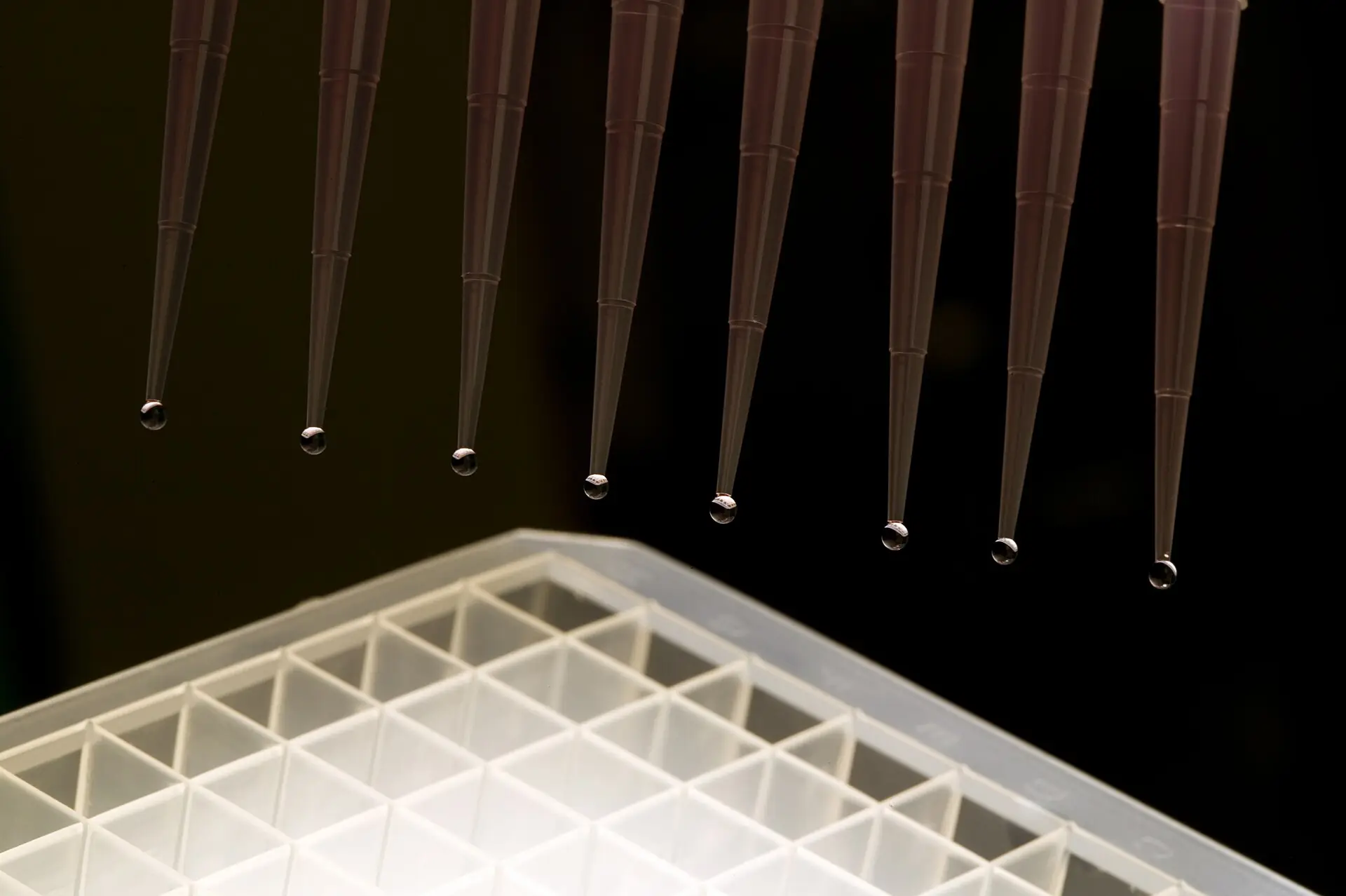
Pipette tips above a multi-well laboratory plate

Biotech & Health

Diagnostics, wearables and health tests for companion animals.

Biotech & Health · 1 of 3

MetaDx outlines plans beyond AI diagnostic support

A Korean company profile describes blood-based tumour screening and anaesthesia-risk software, alongside planned group purchasing for veterinary clinics.

Note: Company profile and product information. The current business announcement does not report a new independent clinical validation.

A ChosunBiz profile published on 20 November describes MetaDx’s plans to combine veterinary AI tools with a clinic-supply business. Its CancerVET service analyses patterns of volatile organic compounds in dogs’ blood to estimate tumour likelihood. Its VitalVET software uses blood-test results and clinical information to support pre-anaesthetic risk assessment and record the factors behind the assessment.

The company says its next step is group purchasing of veterinary medicines and supplies, intended to help smaller clinics manage costs. It also discusses overseas expansion and a longer-term interest in pet insurance. Those plans are distinct from proof that a diagnostic tool improves treatment. The profile does not give a new independent accuracy study, and a screening result or risk estimate still needs to be interpreted alongside the animal’s examination and other evidence.

Why it matters

Diagnostic support and clearer records may help veterinary discussions with owners. Whether a wider business lowers costs or improves care will need evidence beyond product descriptions and expansion plans alone.

Biotech & Health · 2 of 3

PetPace brings its health-monitoring collar to Times Square retail

PetPace’s tm:rw launch gives shoppers a new place to try its AI-assisted health collar. The retail announcement does not establish new clinical performance.

Note: Company retail announcement. Monitoring capabilities are company statements; this release is not a new clinical validation study.

PetPace announced on 23 November that its smart collar for cats and dogs is available at the tm:rw store in New York’s Times Square. The collar records physiological and activity data, including pulse, respiration, temperature and heart-rate variability. The company says its AI and machine-learning software turns these records into health scores and alerts about changes that may need attention.

The announcement concerns distribution of an existing device, rather than a new diagnostic study. A launch promotion offers the collar for US$199 from 23 November to 6 December, with a subscription also required. PetPace says owners can share records with veterinarians. The release does not show that this retail launch changes diagnostic accuracy, prevents illness or replaces an examination when an animal is unwell.

Why it matters

Home measurements can give vets information from between appointments. Wider retail access will help only if owners understand the ongoing cost, the meaning of alerts and when to seek veterinary care.

Biotech & Health · 3 of 3

Kinpreda aims to bring non-animal exposure models into practical use

A 25 November conference report describes René Geci’s work on computer models and his startup Kinpreda. The Brussels event itself took place on 17 November.

Note: Conference and company-development follow-up. The underlying conference predates the coverage window; no new quantified reduction in animal use is established.

A Rapporteur report published on 25 November follows the European Partnership for Alternative Approaches to Animal Testing conference held in Brussels on 17 November. It describes computational toxicologist René Geci’s work combining machine learning with mathematical models to predict chemical concentrations inside the human body, and his focus on commercialising this approach through Kinpreda.

EPAA’s own annual report confirms Geci founded the company in 2026 after work on high-throughput physiologically based kinetic modelling at RWTH Aachen. Such models aim to connect a chemical’s properties and laboratory findings with likely human exposure, reducing dependence on new animal experiments. This week’s follow-up concerns the move toward practical use, not a newly published paper or proof that regulators have accepted the models for every chemical or safety question.

Why it matters

Computer models could reduce demand for animal tests when their predictions are reliable for a defined use. Commercialisation needs to make uncertainty clear, rather than treating every chemical as equally predictable.

Also this week in Biotech & Health

Other animal news from the week with little or no AI angle. Links go to the original source.

  • 24 Nov 2026
    GluCurve signs a new veterinary distribution agreement

    ALR Technologies says Covetrus will distribute its continuous glucose monitor for diabetic cats and dogs in the US and 21 other countries. US sales are expected to begin in December. This is a distribution announcement, with no new AI application or clinical-outcome evidence reported. Source: ALR Technologies company release, 24 Nov 2026

  • 25 Nov 2026
    Zoetis announces conditional US licence for an equine Lyme vaccine

    Zoetis says the USDA has conditionally licensed its Borrelia burgdorferi vaccine for horses. The company’s release states that potency has not been fully demonstrated; this is a conditional licence, not evidence that every performance claim is settled. No AI role is reported. Source: Zoetis company announcement,25Nov2026

Get the weekly briefing

AI and animal news, in your inbox every Friday.