AI × Animals Weekly
Issue 1 · 13–19 November 2026
Subscribe
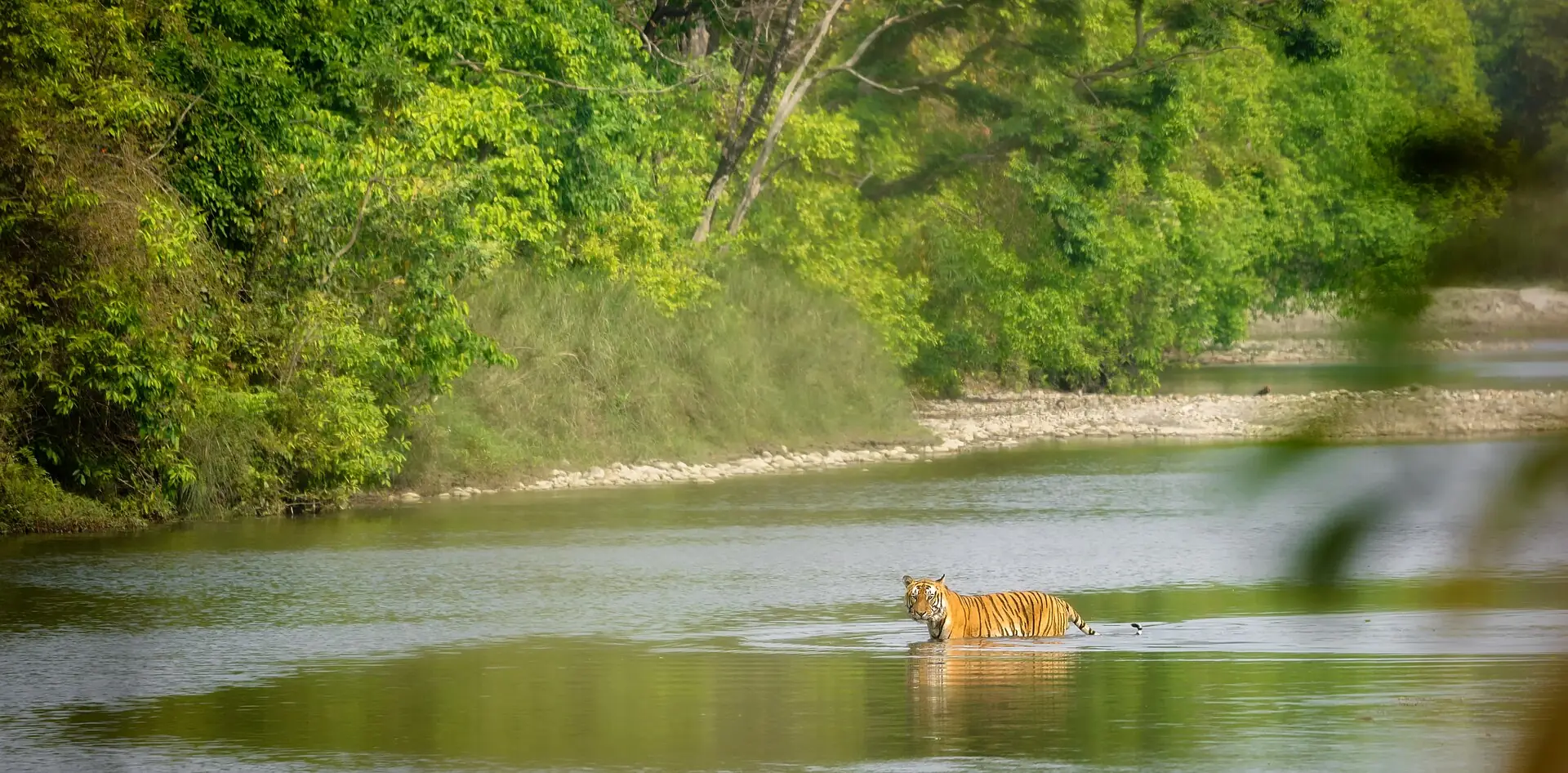
A Bengal tiger crossing a river in Bardiya, Nepal

Wildlife & Conservation

Sensors, satellites and machine learning in the field, and the money behind them.

Wildlife & Conservation · 1 of 3

US grants back tools to prevent whale strikes

Cornell will test whether underwater fibre-optic cables can pick up whale calls. The project is one of 16 backed by $8.4 million in US grants to help prevent ship strikes.

NFWF and NOAA announced $8.4 million for 16 projects on 18 November. The awards cover detection, analysis and alerting for large whales and other marine species. The North Atlantic right whale is among the species the programme aims to protect.

Cornell University will test whether existing underwater fibre-optic cables can detect whales and develop algorithms to recognise their calls. Arizona State University will use high-resolution satellite imagery to develop machine-learning models for spotting whales. Other projects will test acoustic monitoring or explore how to get warnings to recreational mariners.

These projects address different parts of the problem. Detecting an animal is useful only if the information reaches the people who can act on it while they still have time to change course or speed.

Why it matters

AI can help locate whales, but preventing a collision depends on getting that information to a vessel in time. These grants fund work on both detection and warnings.

Wildlife & Conservation · 2 of 3

IUCN and Google.org plan an ecosystem risk tool

The collaboration will develop and pilot an AI-assisted system for assessing the risk of ecosystem collapse.

IUCN and Google.org announced a collaboration at COP31 in Antalya to develop the Spatial Ecosystem Risk Intelligence System, known as SERIS. It is intended to help people assess where ecosystems face the risk of collapse and use those assessments in conservation decisions.

IUCN says the initial pilot will involve the specialists who carry out its Red List of Ecosystems assessments. That brings the tool into an existing assessment process which has already been applied to systems such as coral reefs and mangroves.

The announcement sets out a development and pilot programme. The pilot offers a way to test how the proposed tool handles missing data, whether specialists can interpret its outputs, and where local field observations still need to guide decisions.

Why it matters

AI could help identify risks to habitats animals depend on. Its conservation value will depend on whether specialists can turn those assessments, including their uncertainty, into practical protection.

Wildlife & Conservation · 3 of 3

Lancaster project will test whether fish behaviour can give early warning

The BEACON project will use video and AI to study how animals respond to disturbance on reefs.

Lancaster University announced a project to investigate whether changes in animal behaviour can provide earlier warning of ecological disturbance. Its team plans to use AI to extract behavioural observations from video and to work with conservation managers on tools for interpreting those observations. The project is funded through a three-year UK Research and Innovation fellowship worth nearly £2.2 million.

The research will start on coral reefs, with plans to adapt the approach for UK waters. Researchers will study when behaviour shifts and what might be driving the change. The team will also have to establish what normal variation looks like before deciding which changes merit investigation.

The project is funded through a UK Research and Innovation fellowship. It describes a research programme and a planned transfer between environments. Findings from the field work will determine which signals are useful in particular habitats.

Why it matters

AI may spot changes in fish behaviour before wider damage becomes visible. The research needs to establish which signals warrant action and which simply reflect normal variation.

Also this week in Wildlife & Conservation

Other animal news from the week with little or no AI angle. Links go to the original source.

  • 16 Nov 2026
    Belize transfers land for a Maya Forest corridor link

    WCS welcomed the transfer of more than 3,500 acres to the Maya Forest Corridor Trust. The organisation, a trust partner, says the land completes a link between protected areas important to jaguars, tapirs and other wildlife. Long-term ecological outcomes depend on management and monitoring. Source: WCS statement, 16 Nov

Get the weekly briefing

AI and animal news, in your inbox every Friday.