Other animal news from the week with little or no AI angle. Links go to the original source.
16 Nov 2026
Swedish researchers examine behaviour in German shepherdsThe Swedish University of Agricultural Sciences reports associations between genetic variation and behaviours including curiosity and fearfulness. Source: SLU news, 16 Nov 2026
13 Nov 2026
Dog behaviour study compares responses after play and separationIn a small study of 16 pet dogs, the animals spent more time attending to a lion-growl recording after brief separation from their owners than after play; the authors call for larger studies. Source: Animal Welfare, Cambridge Core, 13 Nov
18 Nov 2026
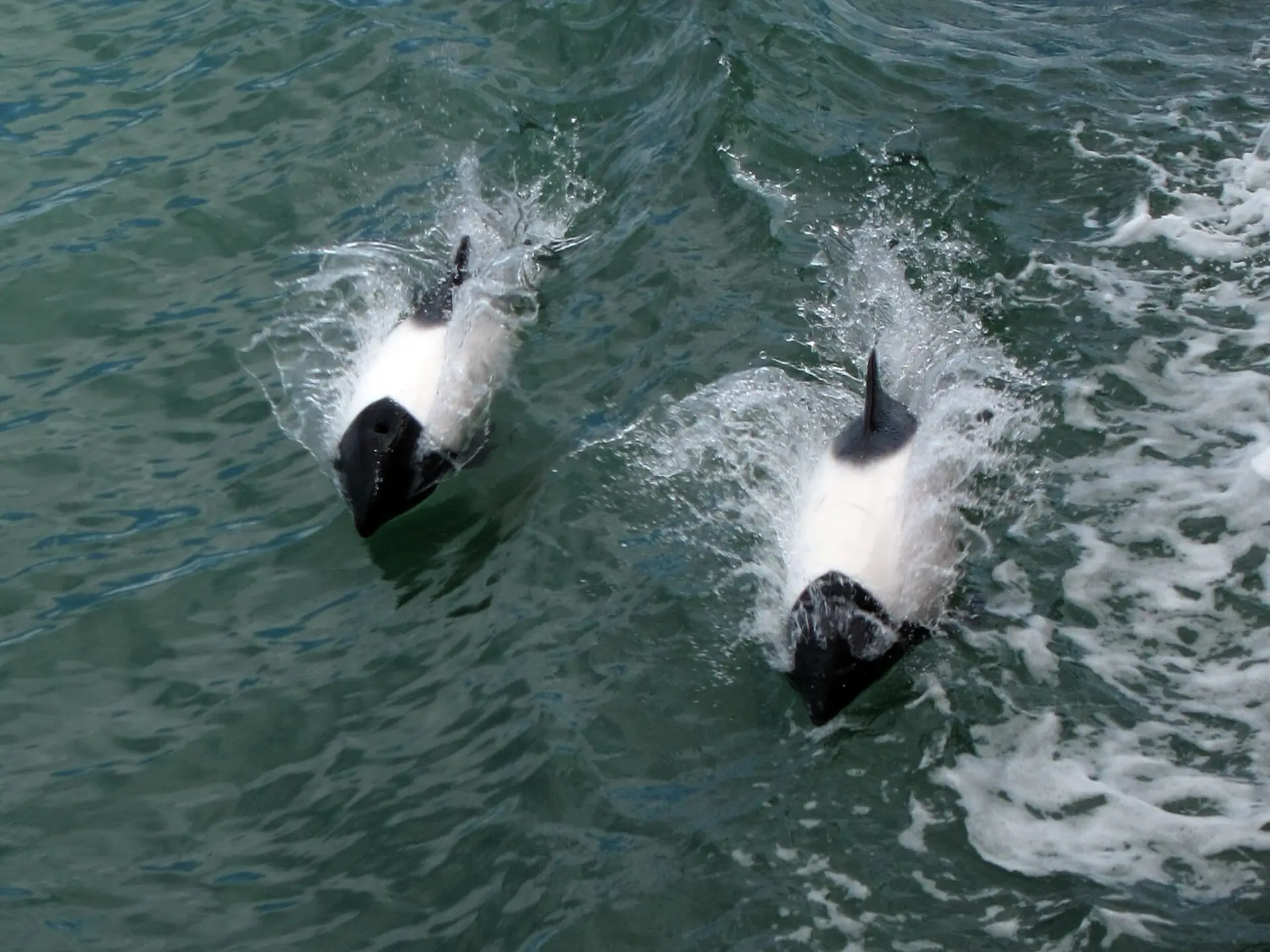
Drone sampling study reports a respiratory baseline in wild dolphinsDugény and colleagues collected exhaled material from wild bottlenose dolphins in Greece and used environmental controls to distinguish sample signals from surrounding air and seawater. Source: Frontiers in Veterinary Science author abstract
16 Nov 2026
Lab Animal commentary revisits tools for better animal-study designPearl, Menon and Smith discuss resources for planning research, considering alternatives to animal use, preregistering studies and making methods and results easier to inspect. Source: Lab Animal, 16 Nov
17 Nov 2026
CITES records suggest a limited link between captive breeding and wild reptile tradeWang, Meng and Carrasco analysed trade reported from 1991 to 2024. Rising captive-bred supply was associated with a small decline in reported wild-sourced trade in the following year. Source: Authors’ Conservation Biology abstract, republished by the Pacific Islands Protected Area Portal
18 Nov 2026
Interviews reveal different understandings of the three Rs in animal researchRodriguez and colleagues interviewed 89 professionals involved in Swiss animal research. Their qualitative study examines how people apply replacement, reduction and refinement across scientific, ethical and public-policy roles. Source: Frontiers in Veterinary Science, 18 Nov
13 Nov 2026
Researchers test an image-based proxy for flying-insect diversityResearchers scanned sticky traps from Israeli agricultural and natural habitats, detected insects with machine learning and compared visual diversity with expert taxonomy. The author abstract reports an association but provides no validation-set size or numerical correlation. Sticky traps capture and kill insects. This study has not yet been peer reviewed. Source: Author manuscript and dated bioRxiv API, 13 Nov
17 Nov 2026
Hybrid insect distribution models combine experiments and occurrence recordsResearchers compared mechanistic thermal models, deep learning and combinations of the two for six insect species. The author abstract reports that hybrid approaches were less sensitive to missing occurrence records. The models use historical environmental and experimental information; no field management benefit is established. This study has not yet been peer reviewed. Source: Author manuscript and dated bioRxiv API, 17 Nov
19 Nov 2026
ZoionNET manuscript describes acoustic alerts for animal intrusionVijay and colleagues describe a battery-powered node that classifies animal sounds and sends cellular alerts. The manuscript was submitted this week and refers to hardware recognised in a 2024 student competition. Its proposed energy advantage has not been measured. Abstract accuracy claims lack test denominators and are omitted. This study has not yet been peer reviewed. Source: Author manuscript, submitted 19 Nov
18 Nov 2026
Simple movement summaries challenge trained behaviour encodersResearchers compared fixed movement measurements with trained representations on mouse, fly and synthetic-motion benchmarks. Their author abstract reports stronger results for the simpler baseline on several tasks, with exceptions for short movements. This is a benchmark comparison using existing datasets. This study has not yet been peer reviewed. Source: Author manuscript and arXiv dated API, 18 Nov
17 Nov 2026
Rat locomotion model links simulated spinal circuits and movementResearchers introduce a biomechanical rat simulation and neural controller informed by mammalian spinal circuitry. The author abstract reports simulated gait patterns consistent with experimental observations. It does not establish that the model replaces live-animal experiments. This study has not yet been peer reviewed. Source: Author manuscript and arXiv dated API, 17 Nov
17 Nov 2026
Broiler behaviour model is converted for an Android appResearchers trained a vision model on publicly available chicken videos to classify sitting, standing and feeding. The author abstract reports weaker feeding detection, including recall of 0.20 on its reported evaluation. Independent commercial-farm validation is not established. This study has not yet been peer reviewed. Source: Author manuscript and arXiv dated API, 17 Nov
13 Nov 2026
Bloom learns shared representations from mouse brain-cell dataResearchers describe a transformer trained on 300,000 adult mouse brain cells with paired molecular measurements. The author abstract reports comparisons with other cell models for annotation and related tasks. This is computational work on animal-derived data, with biological hypotheses still requiring testing. This study has not yet been peer reviewed. Source: Author manuscript and dated bioRxiv API, 13 Nov
18 Nov 2026
REGAL designs tissue-specific regulatory sequences across speciesResearchers use reinforcement learning to design enhancer arrangements. Their author abstract describes experimental work in transgenic mouse embryos, zebrafish and fruit flies, alongside human-cell comparisons. Animal numbers and full validation details were not accessible in this pass. This study has not yet been peer reviewed. Source: Author manuscript and dated bioRxiv API, 18 Nov
19 Nov 2026
NeuroImgAgent proposes checked workflows for cross-species brain imagingResearchers describe language-model agents for human, macaque, rat and mouse imaging workflows, with checks that can continue processing, attempt recovery or stop. The author abstract reports expert assessments of processing outputs. This concerns analysis quality rather than a demonstrated reduction in animal use. This study has not yet been peer reviewed. Source: Author manuscript and dated bioRxiv API, 19 Nov
18 Nov 2026
Resistance genes support experimental attribution of bacterial sourcesResearchers used resistance-gene profiles to classify Acinetobacter baumannii genomes from people, companion animals, soil and white storks. The author abstract reports markedly poorer performance for soil and stork sources than for the other groups. Source association does not by itself establish transmission direction. This study has not yet been peer reviewed. Source: Author manuscript and dated bioRxiv API, 18 Nov
17 Nov 2026
Survey examines recurring piling in cage-free hensMazocco and colleagues surveyed 90 respondents; 83 reported piling and 57 of those described recurrent episodes. The study found no clear association with the tested flock-size, nest or lights-off categories. The authors call for prospective measurements before proposed conditions are treated as risk factors. Source: Peer-reviewed author abstract, 17 Nov
18 Nov 2026
Housing study examines barriers to accommodating petsResearchers interviewed 13 people experiencing homelessness and 23 service professionals in the UK. The study describes how buildings, resources and decision-makers’ attitudes shape pet inclusion. Participants valued animal companionship while identifying welfare and practical concerns. Qualitative interviews do not establish national prevalence. Source: Peer-reviewed author abstract retrieved through Crossref, 18 Nov
17 Nov 2026
Viewers struggle to identify suffering in animal entertainment imagesA study compared 100 lay participants with 156 veterinary students evaluating images and videos of dogs, cats and rabbits. Both groups missed some welfare problems and expressed uncertainty. The findings concern interpretation of the selected material, rather than the prevalence of harmful posts across social media. Source: Peer-reviewed study, 17 Nov
16 Nov 2026
Small chicken study tests gradual dawn and dusk lightingResearchers observed six laboratory-housed chickens before and after adding lamps that gradually changed light levels. They reported changes in startle, stretching and perching behaviour consistent with more natural daily transitions. This small pilot involving live animals provides preliminary evidence, without a commercial-flock trial. Source: Peer-reviewed study, 16 Nov
18 Nov 2026
Authors argue for welfare assessment throughout wildlife tradeA published analysis applies the Five Domains model to bears used in traditional medicine, dolphins used for entertainment and mink farmed for fur. The authors argue that individual welfare should inform trade decisions alongside population conservation. This is an interpretive analysis of existing evidence. Source: Peer-reviewed author abstract, 18 Nov
16 Nov 2026
SCOUBI analyses RNA outside mouse brain-cell bodiesResearchers describe a neural-network method for mapping predicted axon–dendrite interfaces from spatial RNA measurements in mouse brain. The author abstract reports agreement with known anatomical patterns across samples and imaging platforms. This is computational analysis of animal-derived data; direct validation of inferred cell communication remains necessary. This study has not yet been peer reviewed. Source: Author manuscript and dated bioRxiv API
18 Nov 2026
DRAFT models changing regulatory networks in mouse and fly dataResearchers combine graph and recurrent learning to analyse gene regulation during mouse cell reprogramming and fruit-fly sperm development. The author abstract also reports fly gene-knockdown experiments supporting a predicted regulator. Animal numbers and full experimental methods could not be checked. This study has not yet been peer reviewed. Source: Author manuscript and dated bioRxiv API
13 Nov 2026
Machine learning investigates RNA changes in zebrafish developmentResearchers combined RNA measurements and machine learning during the zebrafish transition from egg to embryo. The author abstract identifies candidate features associated with RNA solubility and describes follow-up molecular measurements. This is research involving zebrafish biological material, without a demonstrated animal-care application. This study has not yet been peer reviewed. Source: Author manuscript and dated bioRxiv API
17 Nov 2026
Computational compound-discovery study reports mouse-model resultsResearchers report using a machine-learning platform to identify ACE-339, a compound targeting aggregated TDP-43 protein. The author abstract describes cell experiments and effects in two mouse models. Mouse findings do not establish safety or effectiveness for people, and animal sample sizes were not available in the accessible summary. This study has not yet been peer reviewed. Source: Author manuscript and dated bioRxiv API
17 Nov 2026
AlphaGenome 2 uses human and mouse atlases for regulatory predictionResearchers describe a sequence model trained with human and mouse cell atlases and other genomic data. The author abstract reports improved prediction of regulatory activity across cell states. This is computational research using animal-derived datasets; its reported benchmarks do not establish replacement of animal experiments. This study has not yet been peer reviewed. Source: Author manuscript and dated bioRxiv API