From the editor
From zoo cameras to veterinary slides, this week’s studies show how much an AI result depends on the animals and conditions it was tested on.
Welfare
Technology that helps people notice stress, pain and illness earlier, and support better everyday care.
Pets
Companion animals at home: consumer devices, apps and AI products for pet owners.
Cozio opens crowdfunding for a mobile dog companion
The company says its robot can look for a dog, offer play or treats, and log activity while an owner is away.
Read the story →South Korea details Elevenliter’s photo-based pet health service
The agriculture ministry profiled Lifet’s screening tools and its business as part of an agri-food venture programme.
Read the story →Far EasTone introduces Enabot’s mobile pet camera in Taiwan
The carrier describes a camera that can travel around the home, follow pets and support two-way communication.
Read the story →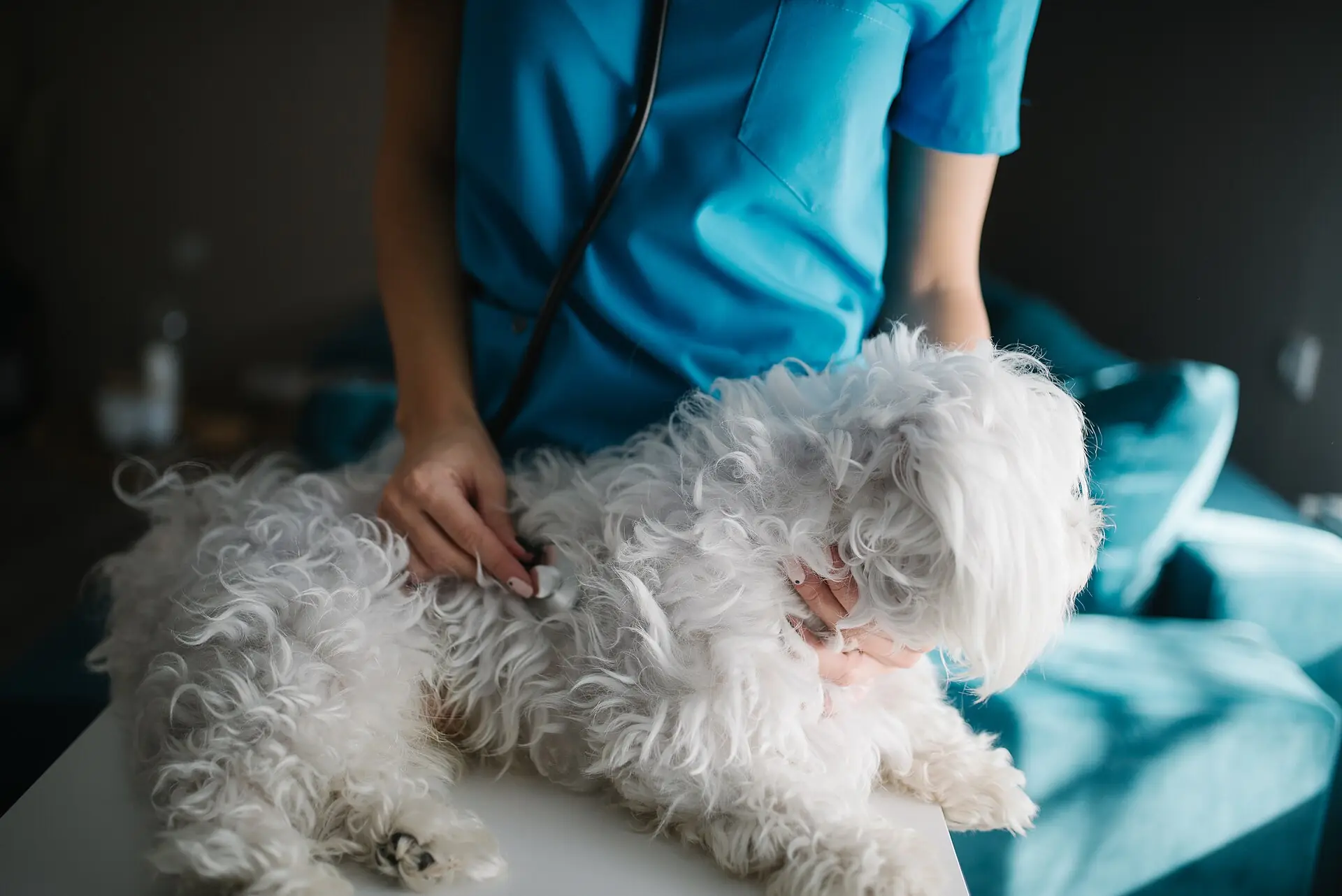
AI Scan brings assisted microscopy to London Vet Show
The system scans slides and presents candidate findings for a veterinarian to review.
Read the story →Teleos brings an AI-enabled practice system to London Vet Show
The browser-based software brings patient-history summaries and draft consultation notes into its practice management system.
Read the story →Micron Agritech takes the Animetri name and brings AniLab to London
The company renamed its AI-assisted faecal egg-count system and announced a demonstration at the London Vet Show.
Read the story →ComparaVet gives veterinary students feedback on anatomy labels
A Tennessee educator describes classroom use of his AI study platform.
Read the story →
Biotech & Health
Diagnostics, wearables and health tests for companion animals.
Farm & Aquaculture
AI in livestock, poultry and fish farming: health monitoring, diagnostics and farm data.
Hatch Blue invests in aquaculture diagnostics company Hadl
The investor says Hadl uses computer vision to analyse farm samples for signs of animal and water health.
Read the story →Halter introduces a farm assistant for herd and pasture questions
Mav draws on Halter data to answer questions about a farm and produce summaries such as weekly herd reports.
Read the story →Nueva Pescanova introduces OptimIA for its seafood processing plants
The company says the project combines machine vision, planning tools and predictive models at its plants in Galicia.
Read the story →
Wildlife & Conservation
Sensors, satellites and machine learning in the field, and the money behind them.
US grants back tools to prevent whale strikes
Cornell will test whether underwater fibre-optic cables can pick up whale calls. The project is one of 16 backed by $8.4 million in US grants to help prevent ship strikes.
Read the story →IUCN and Google.org plan an ecosystem risk tool
The collaboration will develop and pilot an AI-assisted system for assessing the risk of ecosystem collapse.
Read the story →Lancaster project will test whether fish behaviour can give early warning
The BEACON project will use video and AI to study how animals respond to disturbance on reefs.
Read the story →
Funding & Industry
Deals, funds and market data across animal health and pet care.
One NZ directs recycling proceeds towards conservation technology
The fund will support projects using connected sensors, remote monitoring and AI in New Zealand.
Read the story →CompanAIn names an operating chief as it looks for veterinary partners
The company appointed Brük Herbst to lead commercial work as it moves its companion-animal data platform beyond validation.
Read the story →
Research & Data
New papers, open datasets and benchmarks, including studies that use research animals.
Computer vision flags changes in animal behaviour
A research toolkit turns continuous footage into activity records and can notify staff when selected behaviours recur.
Read the story →Researchers test whether image models can distinguish closely related species
PS-SPLIT tests category discovery on a task inspired by how taxonomists separate closely related species.
Read the story →Researchers compare ways to represent location in species maps
The study sets out an evaluation framework for the geographic inputs used by species distribution models.
Read the story →Researchers test automated grading of canine mammary tumour slides
The model agreed with a veterinary pathologist consensus on most of a small independent set of dog slides.
Read the story →Vet-OncoNet aligns tumour records from seven pathology laboratories
The system combines reusable expert decisions, machine-assisted coding and manual review for uncertain entries.
Read the story →Researchers automate dog heart-size measurements on chest X-rays
The method estimates two standard measurements from complementary views and compares its results with human measurements.
Read the story →Dog skin photo study finds performance falls on a stricter test
Researchers grouped images by source to reduce the chance that near-duplicates appeared in both training and testing.
Read the story →Zhang and colleagues review how AI is entering veterinary education
A narrative review describes potential teaching uses and finds limited evidence about student outcomes.
Read the story →Udder thermal images add limited information in a one-herd mastitis study
A model’s sensitivity fell sharply during internal testing; milk cell counts supplied most of the predictive information.
Read the story →Researchers test smartphone photos for sorting mud crab maturity
A model trained on one lighting setup performed worse when tested on photographs taken under another.
Read the story →Researchers test drone images for estimating tilapia biomass
In a four-unit pilot, an image-based biomass estimate was less accurate against harvest weights than simpler baselines.
Read the story →Researchers identify small mammals from footprints on tracking plates
A South African study tests whether computer vision can turn small footprints into usable records of species presence.
Read the story →Researchers use rabbit ultrasound to test liver-injury classification
The experimental study measures how well a model detects signs of blunt injury in ultrasound images.
Read the story →Kim and colleagues test phone images for flagging dental problems in dogs
The models classified visible tartar and gum inflammation in separate image sets from veterinary hospitals.
Read the story →Li and colleagues review wearable sensors for assessing fatigue in sport horses
The review compares signals such as heart rate, temperature and movement, and calls for clearer definitions of fatigue.
Read the story →Researchers test photo identification across 30 mosquito species
The study compares image models for classifying species when labelled examples are scarce or unevenly distributed.
Read the story →Researchers review AI approaches to monitoring poultry health
A narrative review compares evidence from cameras, sound and other sensors and highlights the need for validation on farms.
Read the story →Lab Animal authors call for evidence when AI informs animal-use decisions
An opinion article applies the principles of replacement, reduction and refinement to AI tools used in research.
Read the story →University of Padua team evaluates AI for poultry disease surveillance
Researchers compared computer classifications of a poultry virus with groupings assigned by earlier genetic analyses.
Read the story →Researchers combine machine learning and zebrafish experiments in heart-disease study
An accepted paper identifies candidate genes in human data and investigates related biological effects in a fish model.
Read the story →Calf lung-sound study separates animals between training and testing
Researchers test an audio classifier while keeping recordings from each calf together.
Read the story →Bee movement records reveal associations with colony survival
A survival-modelling study examines commercial colony movements without establishing cause and effect.
Read the story →Cattle posture model reports a strong benchmark with a familiar testing limitation
A lightweight vision system recognises four postures, but similar video frames can occur on both sides of the test split.
Read the story →Also this week
Other animal news from the week with little or no AI angle. Links go to the original source.
- US wildlife agency adopts IATA’s live-animal transport checklist
IATA says the US Fish and Wildlife Service is the first government agency to adopt its digital tool for checking live-animal shipments. Source: IATA press release, 17 Nov 2026
- Swedish researchers examine behaviour in German shepherds
The Swedish University of Agricultural Sciences reports associations between genetic variation and behaviours including curiosity and fearfulness. Source: SLU news, 16 Nov 2026
- Volition expands feline test agreement with Fujifilm
Volition says the amended Japanese supply agreement allows development and use of its feline test. Source: Volition press release, 16 Nov 2026
- PawSwing reports a pre-Series A close
The maker of a mechanical cat-grooming device says it will use the funding for product development, production and retail expansion. Source: PawSwing company release
- Dog behaviour study compares responses after play and separation
In a small study of 16 pet dogs, the animals spent more time attending to a lion-growl recording after brief separation from their owners than after play; the authors call for larger studies. Source: Animal Welfare, Cambridge Core, 13 Nov
- Northern Ireland outlines next steps on pet welfare reforms
The department published its consultation response and said it would consult on stronger dog-breeding rules and work on microchipping, while restrictions on third-party puppy and kitten sales progress through approvals. Source: Department of Agriculture, Environment and Rural Affairs, 19 Nov
- CaniCatiCare announces US market plans for a canine tumour test
The company says it is bringing its PCR-based canine tumour mutation test to US clinics; its turnaround claim is measured from sample receipt. Source: CaniCatiCare release via FinancialContent, 14 Nov
- FluoretiQ invites practices to join its veterinary diagnostic partnership
The company used the London Vet Show to invite UK practices to test its point-of-care bacterial identification system for dogs and cats. Source: FluoretiQ exhibitor announcement, 19 Nov
- Antech previews a UK training hub for veterinary professionals
Antech announced a UK continuing-education offering and a virtual-reality laboratory demonstration for the London Vet Show. Source: Antech release via VetClick, 18 Nov
- An industry analysis finds drugs and diagnostics drew most disclosed funding in its sample
Good Company reports that drugs, biotech and diagnostics took 65.5% of disclosed funding in 20 announced rounds it tracked through October, with one deal comprising more than half of the disclosed total. Source: Good Company industry analysis, 13 Nov
- UN University brief reviews AI in food and agriculture
The brief discusses livestock monitoring among wider agricultural uses and cautions that evidence, data and connectivity differ substantially across farming systems. Source: UN University policy brief, 13 Nov
- Drone sampling study reports a respiratory baseline in wild dolphins
Dugény and colleagues collected exhaled material from wild bottlenose dolphins in Greece and used environmental controls to distinguish sample signals from surrounding air and seawater. Source: Frontiers in Veterinary Science author abstract
- Lab Animal commentary revisits tools for better animal-study design
Pearl, Menon and Smith discuss resources for planning research, considering alternatives to animal use, preregistering studies and making methods and results easier to inspect. Source: Lab Animal, 16 Nov
- CITES records suggest a limited link between captive breeding and wild reptile trade
Wang, Meng and Carrasco analysed trade reported from 1991 to 2024. Rising captive-bred supply was associated with a small decline in reported wild-sourced trade in the following year. Source: Authors’ Conservation Biology abstract, republished by the Pacific Islands Protected Area Portal
- GFCM lists an aquaculture AI workshop in Türkiye
The General Fisheries Commission for the Mediterranean scheduled its hybrid workshop in Muğla for 17–19 November. The meeting page provides an agenda, with outcomes still to be checked. Source: GFCM meeting listing
- Interviews reveal different understandings of the three Rs in animal research
Rodriguez and colleagues interviewed 89 professionals involved in Swiss animal research. Their qualitative study examines how people apply replacement, reduction and refinement across scientific, ethical and public-policy roles. Source: Frontiers in Veterinary Science, 18 Nov
- Researchers test an image-based proxy for flying-insect diversity
Researchers scanned sticky traps from Israeli agricultural and natural habitats, detected insects with machine learning and compared visual diversity with expert taxonomy. The author abstract reports an association but provides no validation-set size or numerical correlation. Sticky traps capture and kill insects. This study has not yet been peer reviewed. Source: Author manuscript and dated bioRxiv API, 13 Nov
- Hybrid insect distribution models combine experiments and occurrence records
Researchers compared mechanistic thermal models, deep learning and combinations of the two for six insect species. The author abstract reports that hybrid approaches were less sensitive to missing occurrence records. The models use historical environmental and experimental information; no field management benefit is established. This study has not yet been peer reviewed. Source: Author manuscript and dated bioRxiv API, 17 Nov
- ZoionNET manuscript describes acoustic alerts for animal intrusion
Vijay and colleagues describe a battery-powered node that classifies animal sounds and sends cellular alerts. The manuscript was submitted this week and refers to hardware recognised in a 2024 student competition. Its proposed energy advantage has not been measured. Abstract accuracy claims lack test denominators and are omitted. This study has not yet been peer reviewed. Source: Author manuscript, submitted 19 Nov
- Simple movement summaries challenge trained behaviour encoders
Researchers compared fixed movement measurements with trained representations on mouse, fly and synthetic-motion benchmarks. Their author abstract reports stronger results for the simpler baseline on several tasks, with exceptions for short movements. This is a benchmark comparison using existing datasets. This study has not yet been peer reviewed. Source: Author manuscript and arXiv dated API, 18 Nov
- Rat locomotion model links simulated spinal circuits and movement
Researchers introduce a biomechanical rat simulation and neural controller informed by mammalian spinal circuitry. The author abstract reports simulated gait patterns consistent with experimental observations. It does not establish that the model replaces live-animal experiments. This study has not yet been peer reviewed. Source: Author manuscript and arXiv dated API, 17 Nov
- Broiler behaviour model is converted for an Android app
Researchers trained a vision model on publicly available chicken videos to classify sitting, standing and feeding. The author abstract reports weaker feeding detection, including recall of 0.20 on its reported evaluation. Independent commercial-farm validation is not established. This study has not yet been peer reviewed. Source: Author manuscript and arXiv dated API, 17 Nov
- Bloom learns shared representations from mouse brain-cell data
Researchers describe a transformer trained on 300,000 adult mouse brain cells with paired molecular measurements. The author abstract reports comparisons with other cell models for annotation and related tasks. This is computational work on animal-derived data, with biological hypotheses still requiring testing. This study has not yet been peer reviewed. Source: Author manuscript and dated bioRxiv API, 13 Nov
- REGAL designs tissue-specific regulatory sequences across species
Researchers use reinforcement learning to design enhancer arrangements. Their author abstract describes experimental work in transgenic mouse embryos, zebrafish and fruit flies, alongside human-cell comparisons. Animal numbers and full validation details were not accessible in this pass. This study has not yet been peer reviewed. Source: Author manuscript and dated bioRxiv API, 18 Nov
- NeuroImgAgent proposes checked workflows for cross-species brain imaging
Researchers describe language-model agents for human, macaque, rat and mouse imaging workflows, with checks that can continue processing, attempt recovery or stop. The author abstract reports expert assessments of processing outputs. This concerns analysis quality rather than a demonstrated reduction in animal use. This study has not yet been peer reviewed. Source: Author manuscript and dated bioRxiv API, 19 Nov
- Resistance genes support experimental attribution of bacterial sources
Researchers used resistance-gene profiles to classify Acinetobacter baumannii genomes from people, companion animals, soil and white storks. The author abstract reports markedly poorer performance for soil and stork sources than for the other groups. Source association does not by itself establish transmission direction. This study has not yet been peer reviewed. Source: Author manuscript and dated bioRxiv API, 18 Nov
- Mexico’s deputies approve national animal-welfare legislation
Humane World for Animals reports passage in the Chamber of Deputies of national animal-welfare legislation recognising sentience and setting responsibilities for public authorities. Its release says publication and an implementation period remain ahead. The legislation does not prohibit bullfighting or cockfighting nationwide. This account is attributed to the participating advocacy organisation. Source: Humane World for Animals release, 18 Nov
- FTC and states sue to block Covetrus–MWI acquisition
Nebraska’s attorney general announced a lawsuit with the FTC and other states opposing Covetrus’s proposed acquisition of MWI Veterinary Supply. The complaint alleges the combination would weaken competition in veterinary distribution. Those are allegations in a pending case, without a ruling on the merits. Source: Nebraska Attorney General, 13 Nov
- Belize transfers land for a Maya Forest corridor link
WCS welcomed the transfer of more than 3,500 acres to the Maya Forest Corridor Trust. The organisation, a trust partner, says the land completes a link between protected areas important to jaguars, tapirs and other wildlife. Long-term ecological outcomes depend on management and monitoring. Source: WCS statement, 16 Nov
- UPSIDE Foods announces a wider cultivated-chicken rollout
UPSIDE Foods announced availability through California restaurants and institutional dining. Its company release describes chicken-cell material blended with plant ingredients and reports annual production capacity above one million pounds. Capacity is a company claim, rather than independently verified output or sales; no AI contribution is established. Source: UPSIDE Foods release, 17 Nov, retrieved through syndicated copy
- Survey examines recurring piling in cage-free hens
Mazocco and colleagues surveyed 90 respondents; 83 reported piling and 57 of those described recurrent episodes. The study found no clear association with the tested flock-size, nest or lights-off categories. The authors call for prospective measurements before proposed conditions are treated as risk factors. Source: Peer-reviewed author abstract, 17 Nov
- Housing study examines barriers to accommodating pets
Researchers interviewed 13 people experiencing homelessness and 23 service professionals in the UK. The study describes how buildings, resources and decision-makers’ attitudes shape pet inclusion. Participants valued animal companionship while identifying welfare and practical concerns. Qualitative interviews do not establish national prevalence. Source: Peer-reviewed author abstract retrieved through Crossref, 18 Nov
- Viewers struggle to identify suffering in animal entertainment images
A study compared 100 lay participants with 156 veterinary students evaluating images and videos of dogs, cats and rabbits. Both groups missed some welfare problems and expressed uncertainty. The findings concern interpretation of the selected material, rather than the prevalence of harmful posts across social media. Source: Peer-reviewed study, 17 Nov
- Small chicken study tests gradual dawn and dusk lighting
Researchers observed six laboratory-housed chickens before and after adding lamps that gradually changed light levels. They reported changes in startle, stretching and perching behaviour consistent with more natural daily transitions. This small pilot involving live animals provides preliminary evidence, without a commercial-flock trial. Source: Peer-reviewed study, 16 Nov
- Authors argue for welfare assessment throughout wildlife trade
A published analysis applies the Five Domains model to bears used in traditional medicine, dolphins used for entertainment and mink farmed for fur. The authors argue that individual welfare should inform trade decisions alongside population conservation. This is an interpretive analysis of existing evidence. Source: Peer-reviewed author abstract, 18 Nov
- SCOUBI analyses RNA outside mouse brain-cell bodies
Researchers describe a neural-network method for mapping predicted axon–dendrite interfaces from spatial RNA measurements in mouse brain. The author abstract reports agreement with known anatomical patterns across samples and imaging platforms. This is computational analysis of animal-derived data; direct validation of inferred cell communication remains necessary. This study has not yet been peer reviewed. Source: Author manuscript and dated bioRxiv API
- DRAFT models changing regulatory networks in mouse and fly data
Researchers combine graph and recurrent learning to analyse gene regulation during mouse cell reprogramming and fruit-fly sperm development. The author abstract also reports fly gene-knockdown experiments supporting a predicted regulator. Animal numbers and full experimental methods could not be checked. This study has not yet been peer reviewed. Source: Author manuscript and dated bioRxiv API
- Machine learning investigates RNA changes in zebrafish development
Researchers combined RNA measurements and machine learning during the zebrafish transition from egg to embryo. The author abstract identifies candidate features associated with RNA solubility and describes follow-up molecular measurements. This is research involving zebrafish biological material, without a demonstrated animal-care application. This study has not yet been peer reviewed. Source: Author manuscript and dated bioRxiv API
- Computational compound-discovery study reports mouse-model results
Researchers report using a machine-learning platform to identify ACE-339, a compound targeting aggregated TDP-43 protein. The author abstract describes cell experiments and effects in two mouse models. Mouse findings do not establish safety or effectiveness for people, and animal sample sizes were not available in the accessible summary. This study has not yet been peer reviewed. Source: Author manuscript and dated bioRxiv API
- AlphaGenome 2 uses human and mouse atlases for regulatory prediction
Researchers describe a sequence model trained with human and mouse cell atlases and other genomic data. The author abstract reports improved prediction of regulatory activity across cell states. This is computational research using animal-derived datasets; its reported benchmarks do not establish replacement of animal experiments. This study has not yet been peer reviewed. Source: Author manuscript and dated bioRxiv API